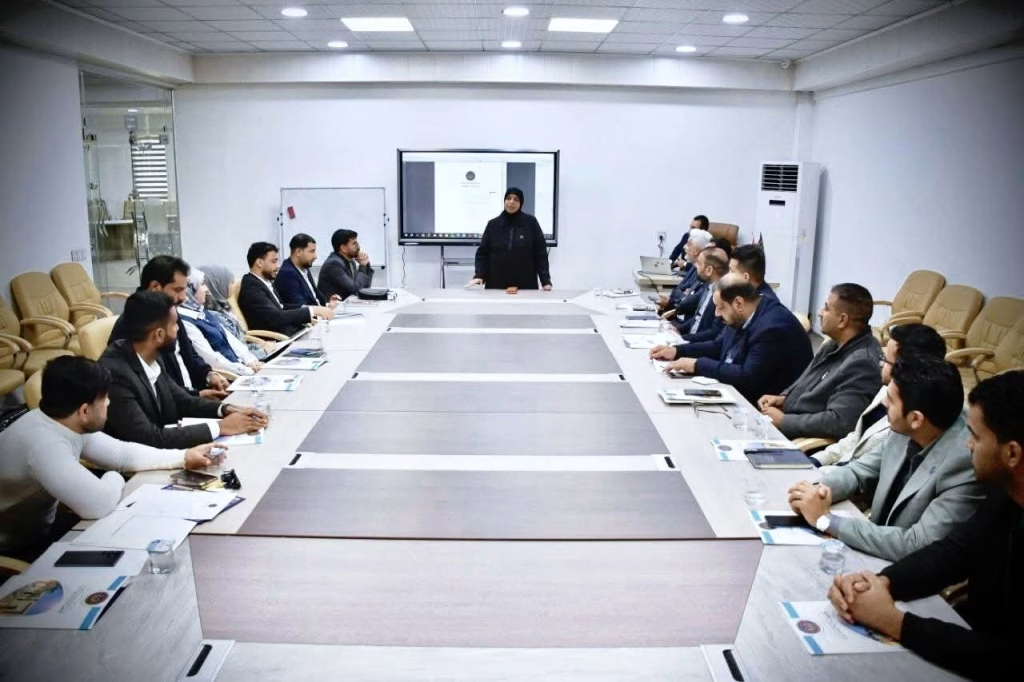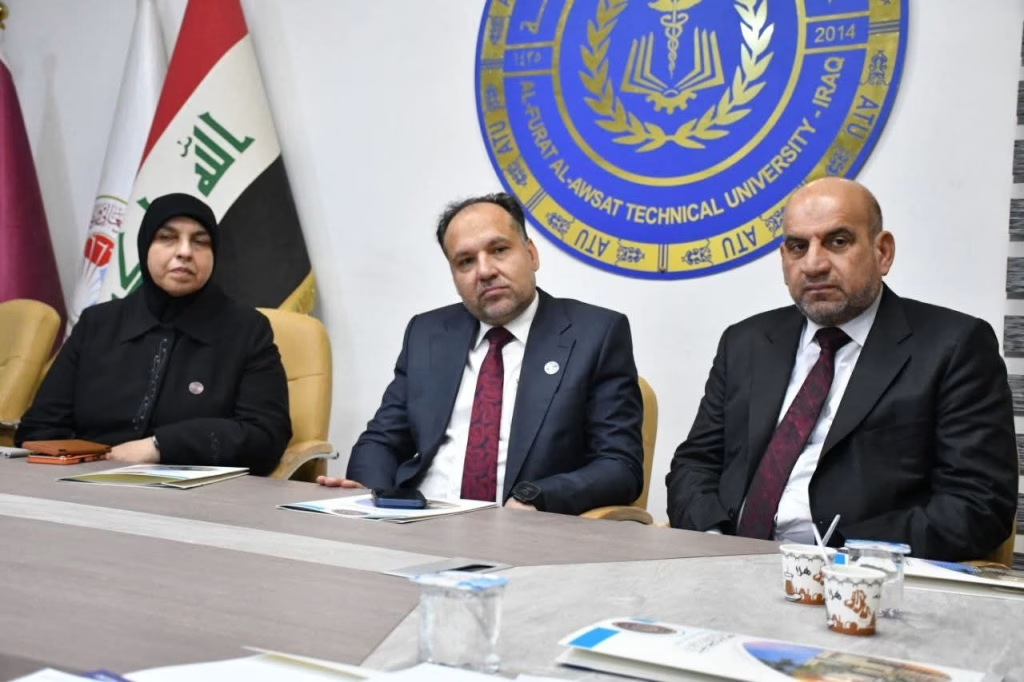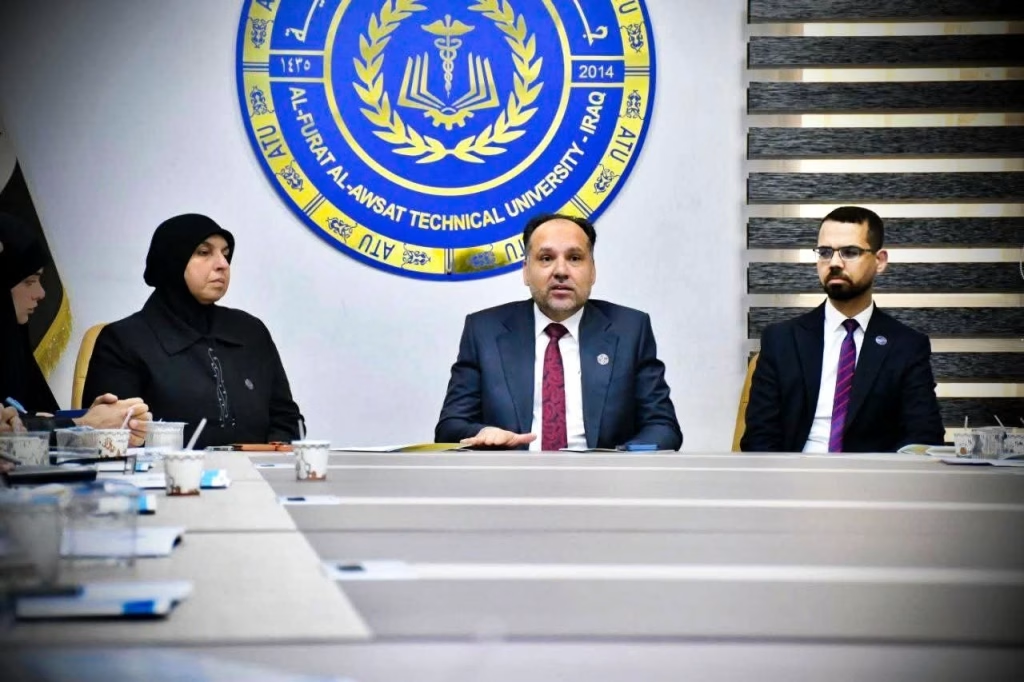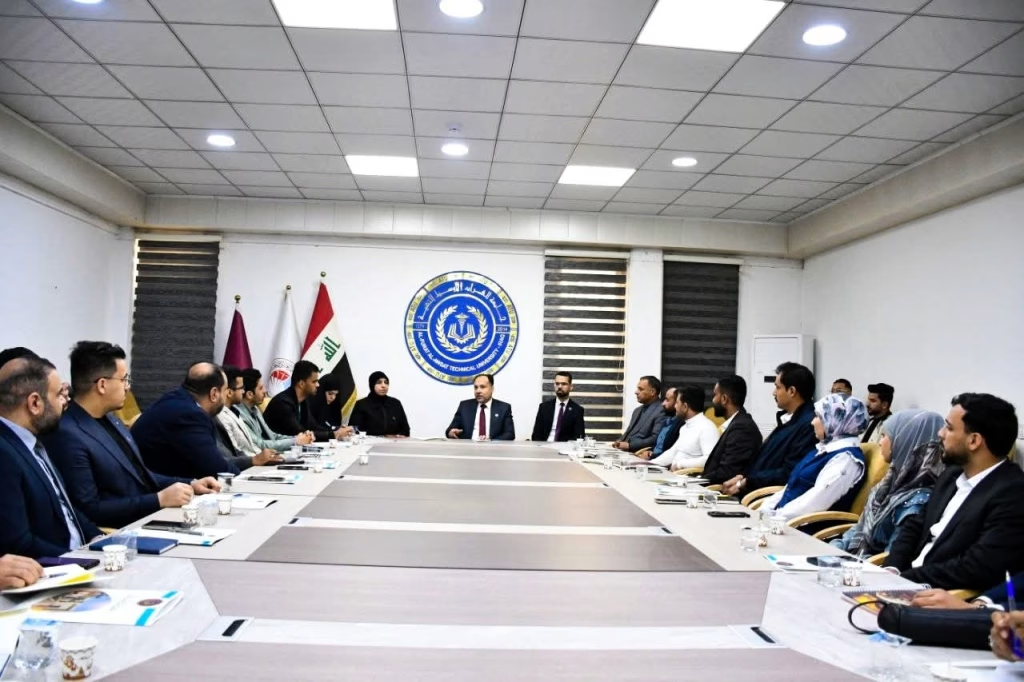
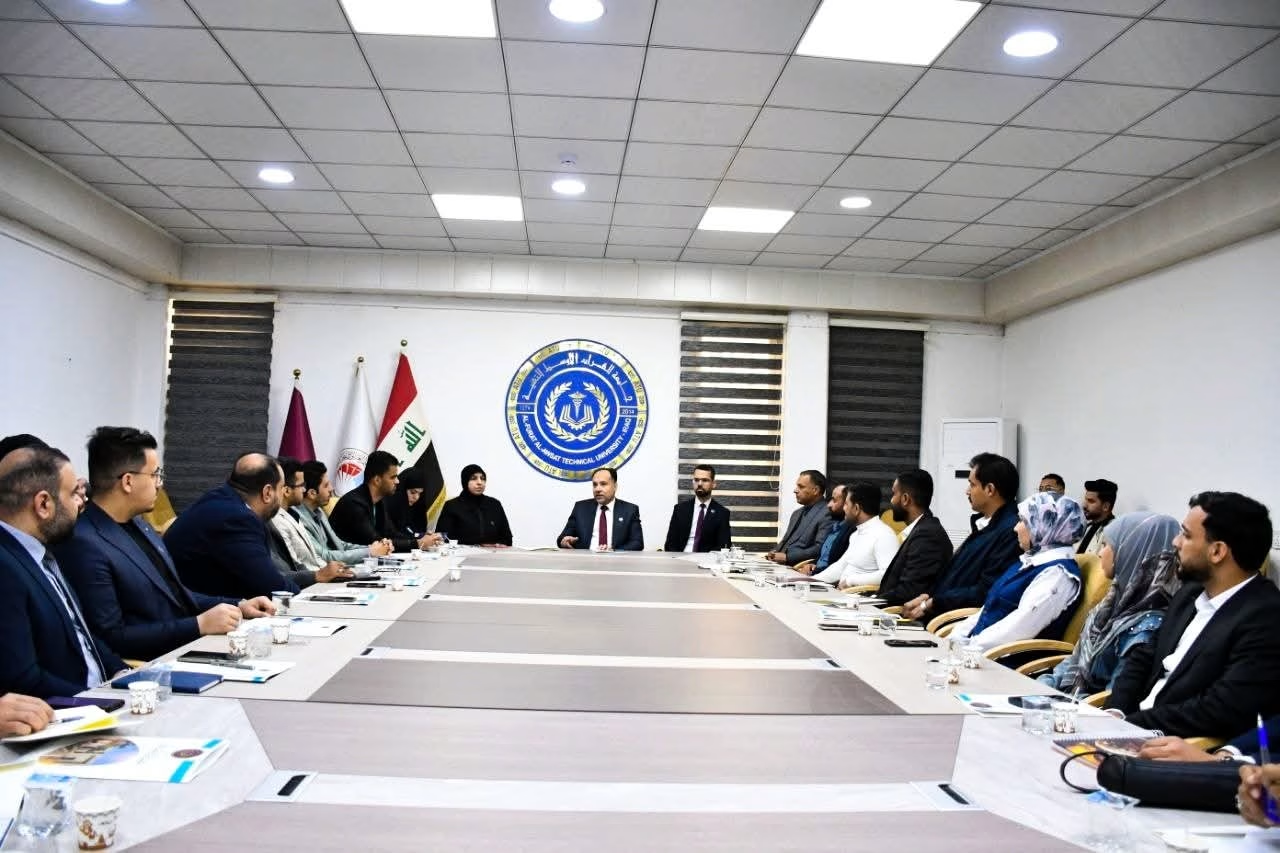
As part of its ongoing efforts to develop its media system and government communication framework, and to build a cohesive institutional identity that reflects its academic standing and societal mission—thereby enhancing its academic presence locally, regionally, and internationally—Al-Furat Al-Awsat Technical University launched a specialized media training course at its Presidency entitled “The Making of Modern University Media.”
The course was organized by the Department of Media and Government Communication in cooperation with the Department of Continuing Education, in the presence of the University President, Professor Dr. Hassan Latif Al-Zubaidi; the Assistant President for Scientific Affairs, Professor Dr. Ahmed Ghanem Wadai; and a number of department directors, as well as officials and staff members of the Media and Government Communication divisions across the University’s formations.
The course commenced with valuable directives delivered by the University President, in which he emphasized:
The importance of providing the public with activities, news, and decisions in a transparent and credible manner, while monitoring audience feedback through communication channels and social media platforms.
Linking the University’s official website with the media divisions regarding mechanisms for publishing news, selecting high-quality content, and subsequently circulating it through social media platforms to strengthen the University’s academic standing and presence locally, regionally, and internationally.
Unifying the media discourse to preserve the University’s visual identity across all formations, thereby enhancing its digital presence on social media platforms.
Strengthening direct engagement with the public and reinforcing official media based on statements and coverage, alongside interactive media that highlights success stories.
Supporting the development of human resources for administrative and technical staff within the Department and divisions of Media and Government Communication at the University Presidency and its formations, by enrolling them in specialized developmental training programs aimed at enhancing soft skills through the Department of Continuing Education.
It is noteworthy that the three-day course, administered by the Department Director, Mr. Nihal Kazem Al-Rubaie, devoted its first day to both theoretical and practical lectures on visual identity and media discourse within academic institutions. The session was delivered by Dr. Murtadha Abdul-Jawad Al-Khazaei, who underscored the importance of transitioning from traditional publishing practices to the construction of a long-term strategic institutional image.
He pointed out that visual identity is not limited to logos or aesthetic elements; rather, it constitutes an integrated system that shapes the mental image of the University. Every publication, image, or media material, he explained, contributes directly either to reinforcing or weakening the institution’s image.
He further stressed the necessity of adopting a unified and binding visual identity manual regulating the use of institutional colors, official fonts, and logo deployment, noting that visual inconsistency among the University’s formations may confuse audiences and weaken institutional coherence.
The lecturer also highlighted the practical dimensions of visual identity, emphasizing the standardization of design templates for publications, reports, and videos, and the adoption of a consistent visual style.
In addition, the session addressed university media discourse, distinguishing between the language of administrative correspondence and that of media publication, and emphasizing the importance of tailoring messages to target audiences—students, faculty members, the local community, and international stakeholders—to ensure clarity and effectiveness.
The discussion further explored the relationship between visual identity and global academic reputation, explaining that the quality of visual presentation and content consistency significantly influence first impressions among international partners and academic institutions, and that institutional professionalism begins with the quality of the image a university presents of itself.
The first day concluded with an analytical practical exercise aimed at transforming theoretical concepts into actionable practices.