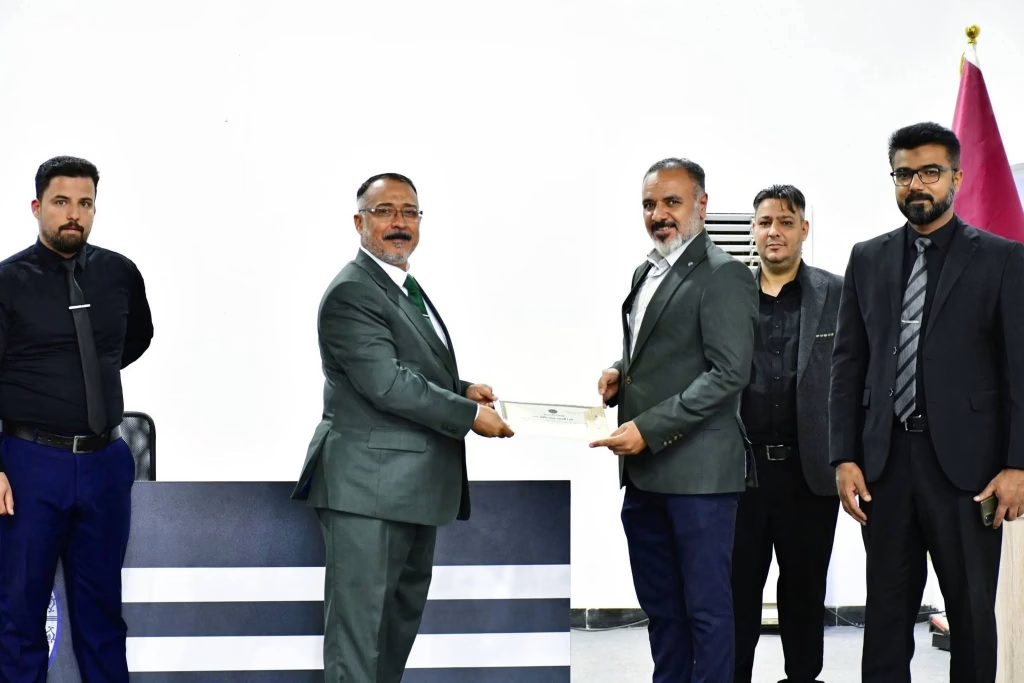
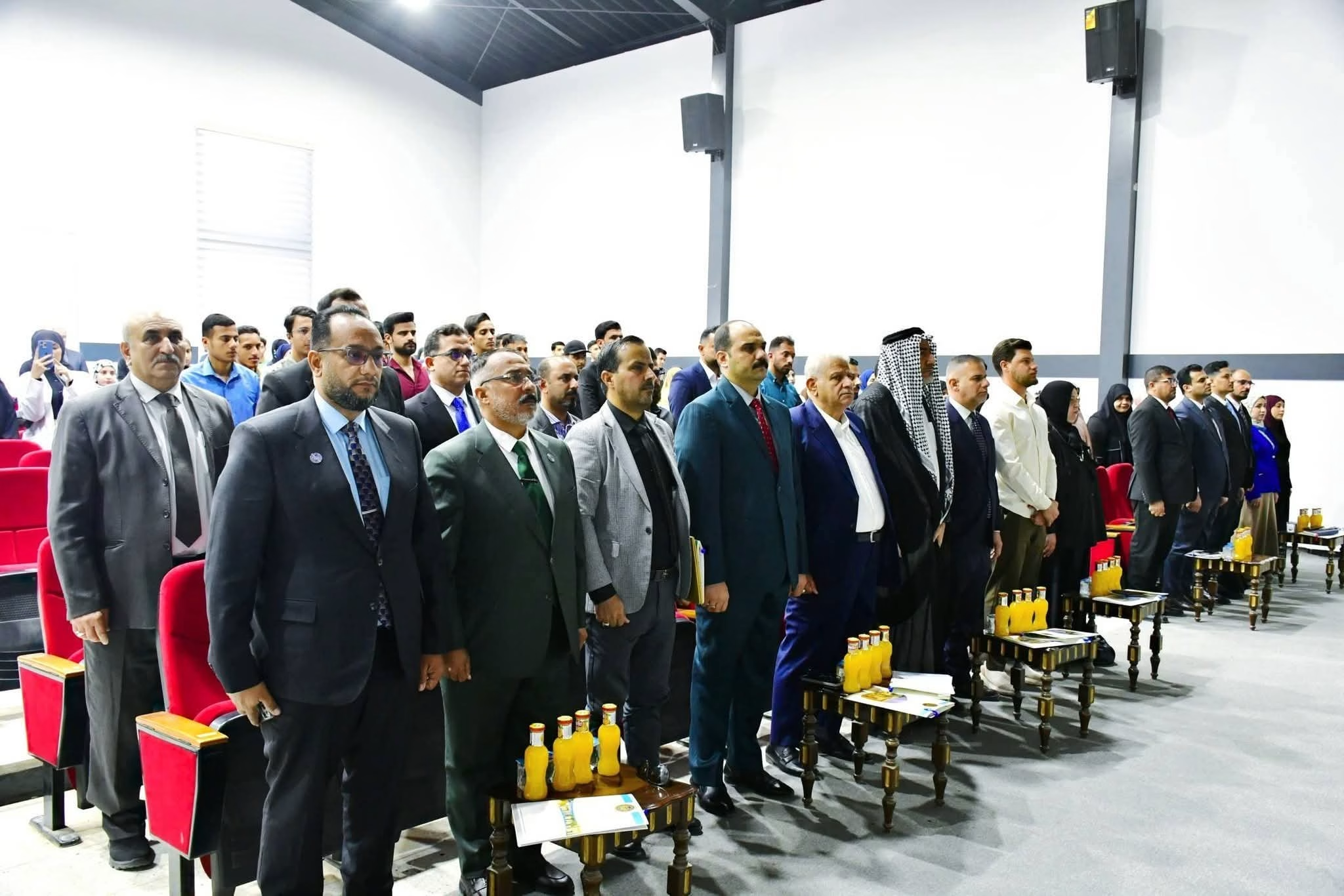
With the aim of fostering effective communication between academic institutions and the broader community, represented by employers, in order to identify the latest scientific developments in line with labor market requirements, and in cooperation with the Media and Government Communication Division, the Rehabilitation and Employment Unit, and the Psychological Guidance and Educational Counseling Unit, the Quality Assurance and University Performance Evaluation Division at the Technical Institute of Kufa—affiliated with Al-Furat Al-Awsat Technical University—organized a workshop for employers under the slogan “Towards a More Efficient and Sustainable Labor Market.”
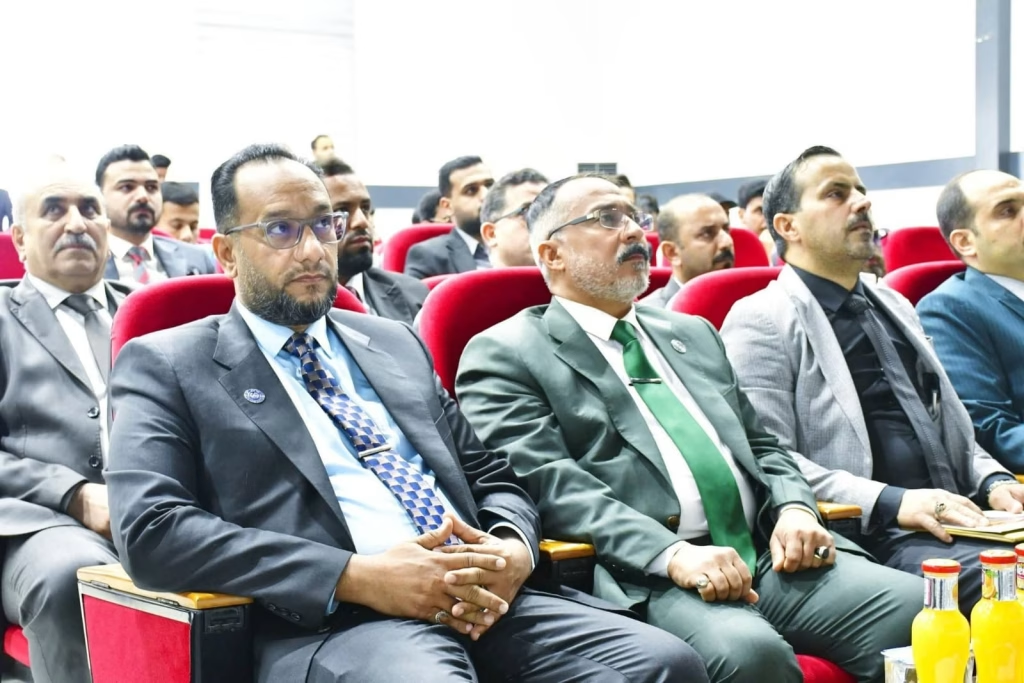
The workshop was attended by Hussein Awad Al-Abadi, Director of the Quality Assurance Department at the University Presidency, along with a number of employers from various sectors, including medical, technological, administrative, and agricultural fields. They were received by Atheer Kazem Abadi, Dean of the Institute; Iyad Muslim Hamza, Assistant Dean for Scientific Affairs and Students; and Kazem Khayoun, Assistant Dean for Administrative and Financial Affairs, in the presence of heads of academic departments, staff members, and students.
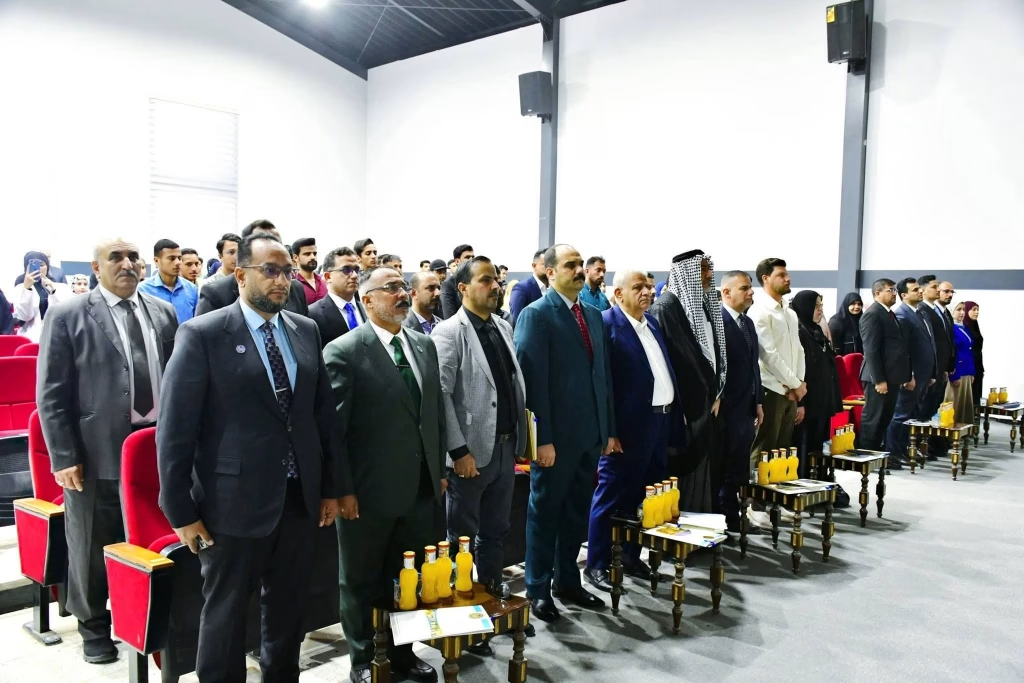
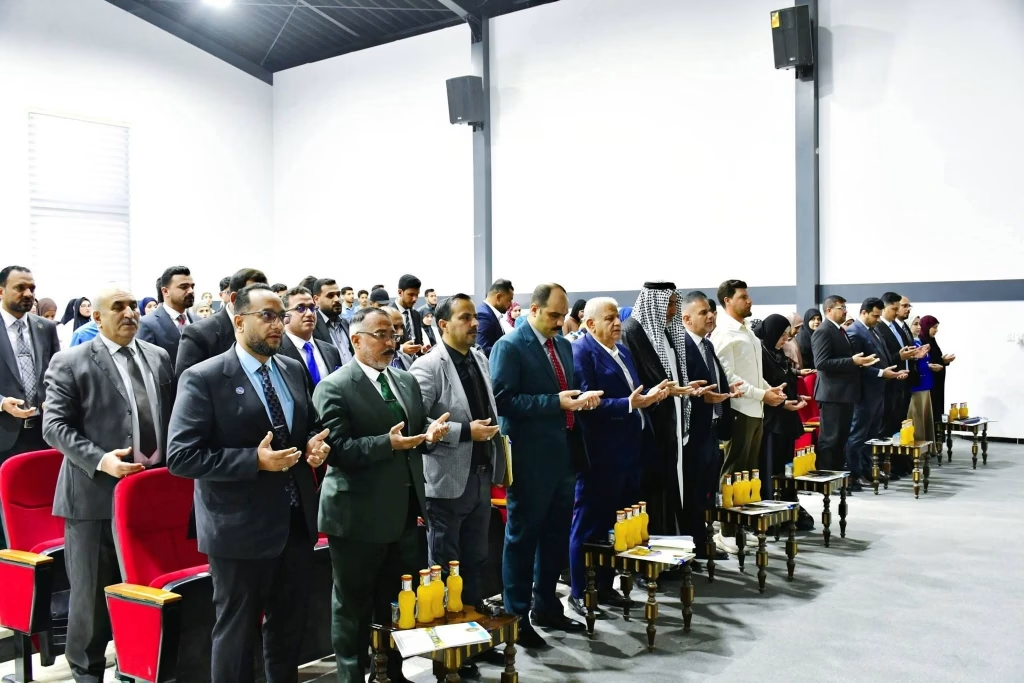
The workshop program included several segments, beginning with the recitation of verses from the Holy Qur’an and the Iraqi national anthem, followed by a presentation introducing the Institute’s academic departments.
The workshop was officially inaugurated by the Dean, who emphasized the Institute’s commitment to continuously reviewing and developing curricula and training programs in alignment with labor market demands. He noted that the workshop represents an effective institutional step toward strengthening communication channels with employers, identifying market needs, and aligning educational outputs with those needs to ensure quality performance and efficient outcomes. He further stated that the workshop aims to familiarize employers with the curricula, gather their feedback and valuable suggestions for development, and explore their perspectives on introducing new specializations that meet market demand.
The workshop concluded with a field tour for the participating employers across the Institute’s academic departments, where they were introduced to laboratories and equipment, and engaged in meetings with departmental staff to discuss the educational and training curricula offered to students. Employers’ feedback regarding the quality of these programs and ways to enhance them was also collected. The workshop resulted in a set of key recommendations in support of its objectives.