
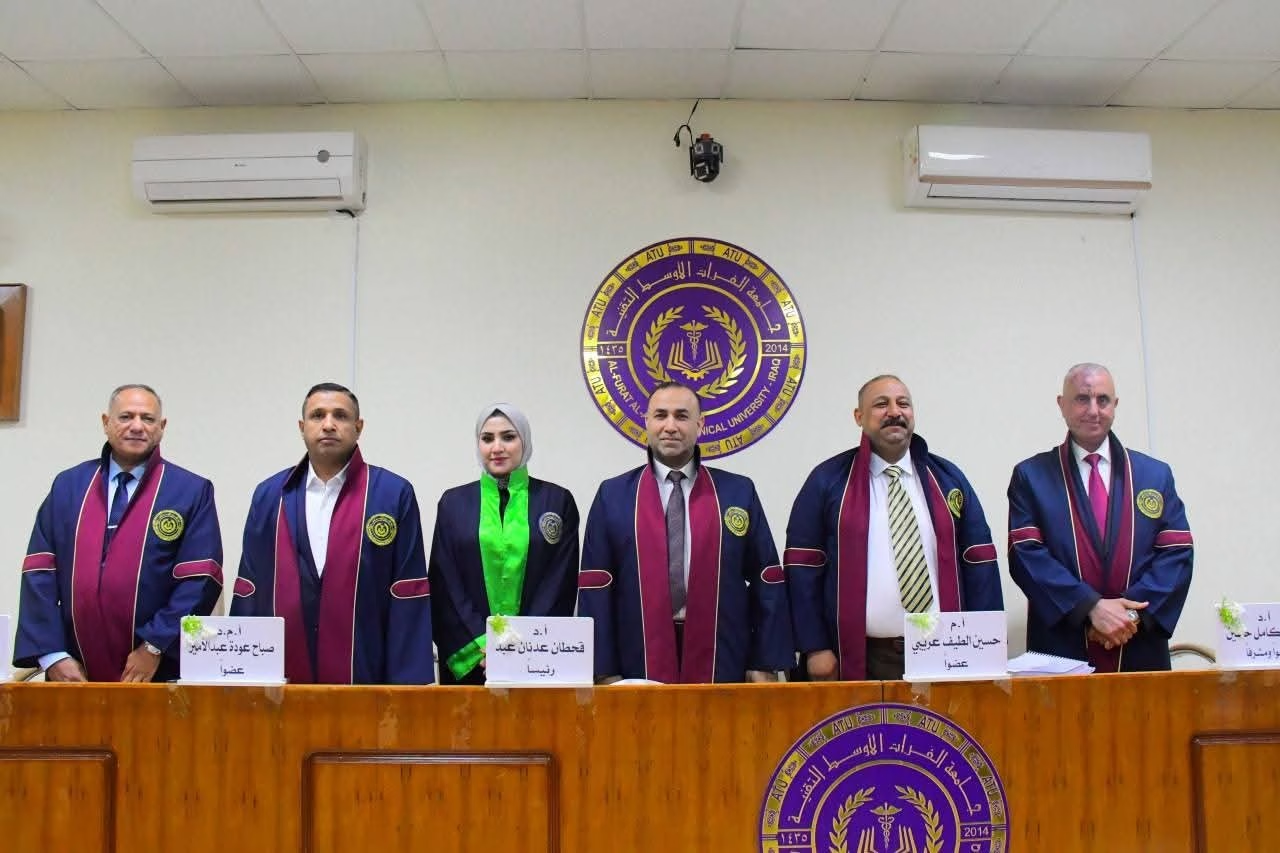
An M.Sc. thesis defense was held at the Al-Musayyib Technical College, one of the formations of Al-Furat Al-Awsat Technical University, for the researcher Saba Khamees Shaker from the Department of Power Mechanical Engineering Techniques. The thesis was entitled:
“An Experimental and Numerical Study on the Effect of Varying the Compression Ratio on the Performance and Emissions of a Single-Cylinder Spark-Ignition Engine.”
The study aimed to evaluate the effect of different gasket thicknesses on the performance of a spark-ignition engine in terms of brake power, thermal efficiency, fuel consumption, and exhaust emissions (CO₂, CO, HC, and NOx). It also involved conducting numerical simulations to predict engine performance and pollutant emissions using ANSYS, followed by validation of the numerical results through comparison with the experimental data. The ultimate objective was to determine the optimal compression ratio that achieves a balance between improving engine performance and reducing exhaust emissions.
The results indicated that the best engine performance was achieved at a gasket thickness of 0.25 mm, corresponding to a compression ratio of 9.37:1. This condition led to an increase in brake power, improved thermal efficiency, and a reduction in specific fuel consumption. Moreover, improvements in exhaust emissions were observed, including a reduction in CO and HC levels and an increase in CO₂ emissions, while a slight rise in NOx emissions was recorded due to the higher combustion temperature.
The study recommends adopting a gasket thickness of 0.25 mm (CR = 9.37:1), as it provided the most favorable engine performance and efficiency. It also suggests conducting future studies to investigate the effects of using nanoparticles and biofuels, or blending them with conventional fuels, at the optimal compression ratio, as well as analyzing their impact on combustion characteristics and emission profiles.


