Al-Furat Al-Awsat Technical University Organizes Scientific Seminar to Bridge the Gap Between Education and the Labor Market
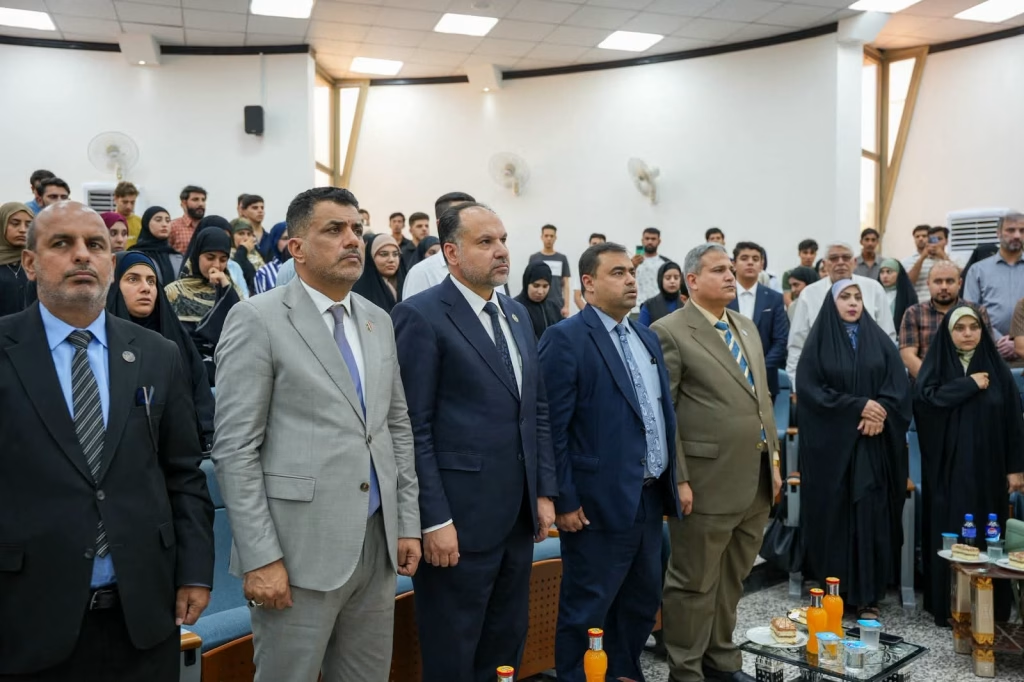
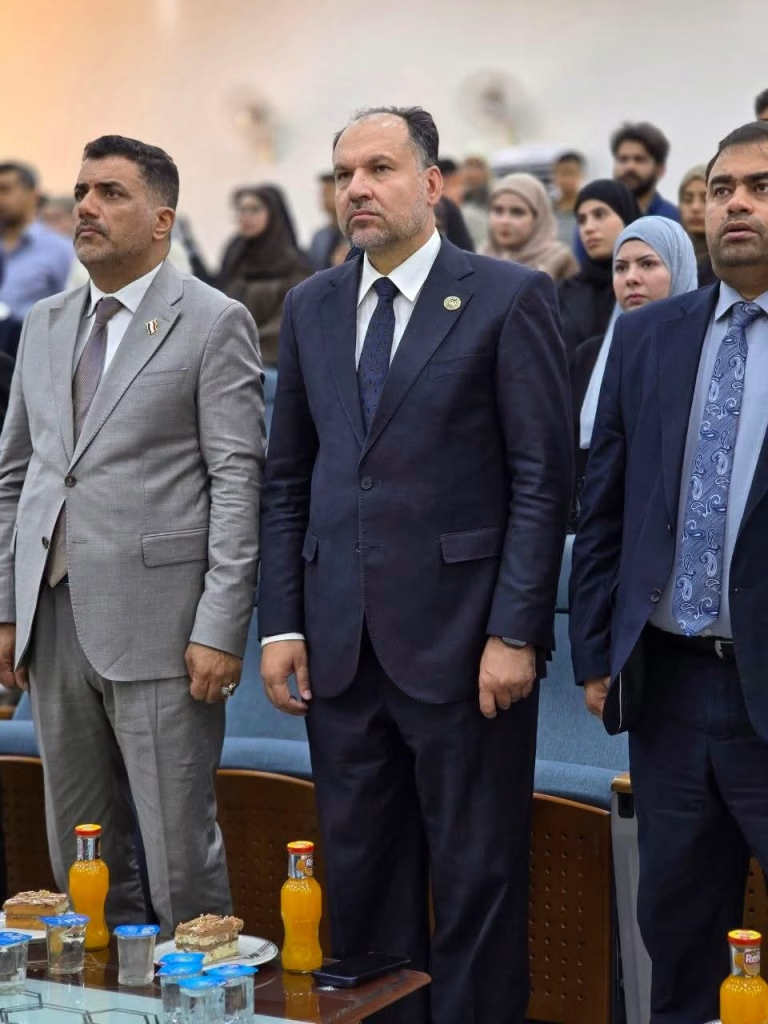
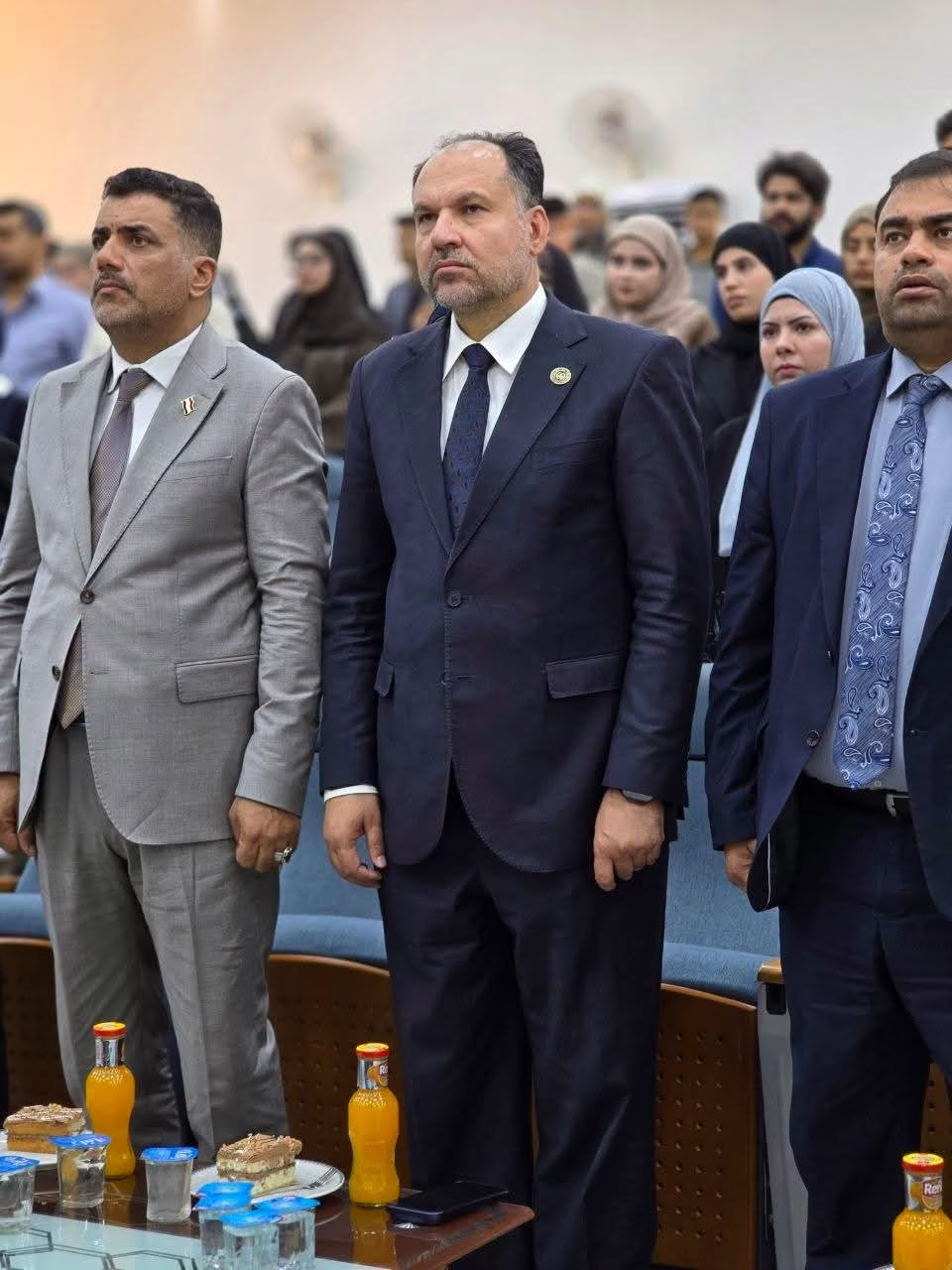
Under the patronage of the President of Al-Furat Al-Awsat Technical University, Professor Dr. Hassan Latif Al-Zubaidi, and under the direct supervision of the Dean of Al-Najaf Technical Institute, Professor Dr. Haider Hassan Al-Abdali, Al-Najaf Technical Institute hosted a specialized scientific seminar entitled “Educational Legislation, Policies, and the Labor Market: Challenges and Opportunities.”
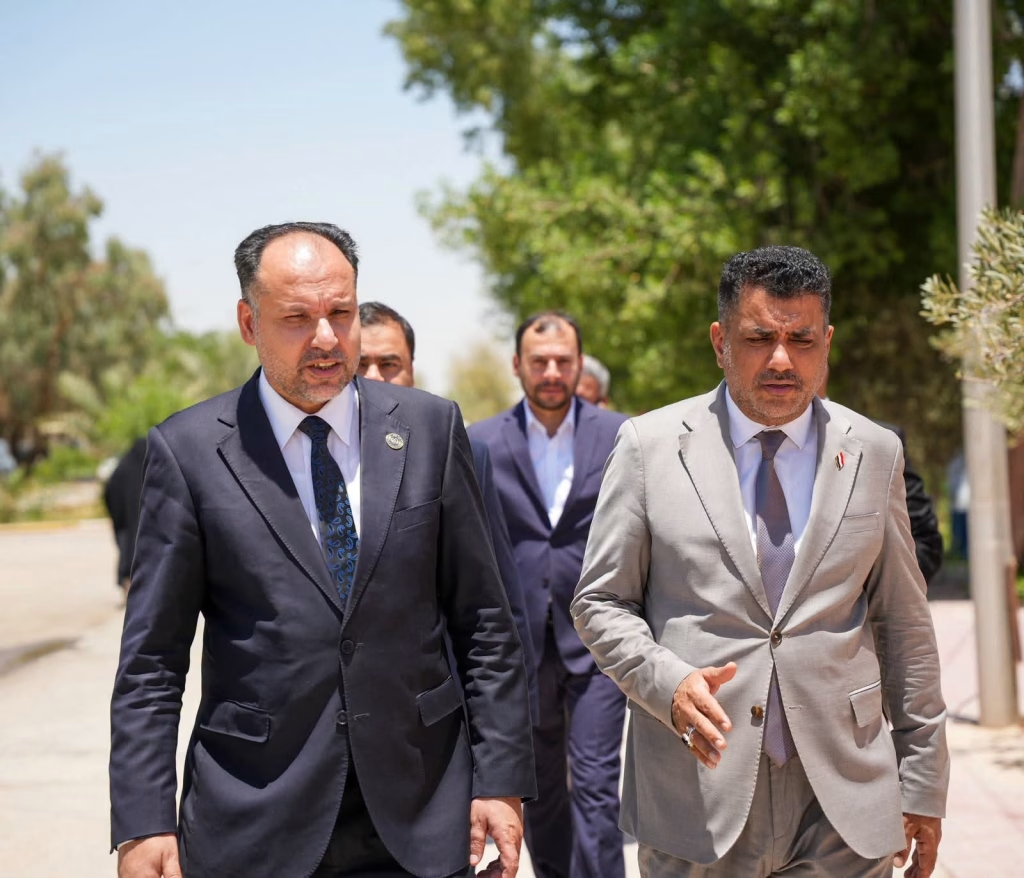
The seminar brought together a distinguished group of academics, researchers, policymakers, and specialists in higher education and human development. It was attended by Mr. Hamed Al-Moussawi, Chairman of the Parliamentary Committee on Industry and Trade, as part of ongoing efforts to enhance the alignment of educational outcomes with the requirements of the Iraqi labor market and to explore prospects for legislative and educational reforms that support sustainable development.
The seminar was moderated by Dr. Haider Rasoul Al-Kaabi, who emphasized in his opening remarks the importance of strengthening cooperation between educational institutions and productive and service sectors. He also highlighted the need to develop educational policies that contribute to preparing graduates equipped with the skills and knowledge necessary to keep pace with rapid changes in both local and global labor markets.
The seminar featured three main scientific sessions. The first session, presented by Dr. Hussein Mazloom Abbas, focused on “The Bologna Educational Process and Its Role in Reducing the Gap Between Graduates and Employment Opportunities.” He reviewed the European experience in higher education reform, the mechanisms for implementing the Bologna Process in Iraqi universities, and its impact on improving educational quality and enhancing graduates’ employability through a greater focus on labor market-relevant skills and competencies.
The second session was delivered by Dr. Amir Hussein Alawi under the title “The Impact of the Ninth Amendment to the Higher Education Ministry Law on Integrating Educational Outcomes with the Labor Market.” The presentation highlighted the key transformations introduced by Law No. 17 of 2024, particularly those related to strengthening the institutional framework of higher education, establishing technological and scientific incubators, enhancing partnerships with the private sector, and creating a supportive environment for innovation and entrepreneurship.
The third session, presented by Dr. Anwar Sabah Ahmed, addressed “Academic Curricula and the Labor Market.” He discussed the importance of continuously updating academic curricula to keep pace with evolving workplace demands and technological advancements. He stressed the necessity of involving both public and private sector institutions in curriculum development to ensure that students acquire the practical and digital skills required for greater competitiveness and responsiveness to local and regional labor market needs.
The seminar also reviewed the strategic priorities embedded in the Ninth Amendment Law, particularly the transition from traditional theoretical educational outputs to application-oriented outcomes capable of addressing skills gaps in the labor market. Other priorities included the establishment of modern specialized departments, expansion of technical, digital, and engineering disciplines, strengthening partnerships with productive and industrial institutions, and fostering academic cooperation with reputable international universities to introduce future-oriented specializations in areas such as artificial intelligence, cybersecurity, and emerging technologies.
Participants further emphasized the importance of developing technical education institutions due to their pivotal role in supplying the labor market with qualified technical professionals. Discussions also highlighted the need to establish an integrated information system for classifying occupations and identifying required skills across Iraqi provinces, strengthen business incubators and youth entrepreneurship initiatives, and capitalize on the authorities granted under the Federal General Budget Law to transform universities into productive institutions that contribute to economic growth and job creation for graduates.
The seminar concluded with a number of key recommendations, including:
• Periodic review of scientific and humanities disciplines in line with labor market needs.
• Mandatory updating of academic curricula every four years with the participation of representatives from professional and productive sectors.
• Adoption of a compulsory field-training program of 400 hours for all students prior to graduation.
• Establishment of a national graduate employment fund financed through public-private partnerships.
• Linking academic accreditation to actual graduate employment indicators.
• Enacting incentives for the private sector to strengthen collaboration with universities.
• Establishing career guidance centers and a national digital employment platform.
• Ensuring that all graduates possess essential digital competencies.
At the conclusion of the seminar, specialists reaffirmed that developing educational legislation and policies, modernizing curricula, and aligning education with development priorities and labor market demands constitute fundamental pillars for building a more efficient and flexible educational system. Such a system would be capable of preparing graduates with the skills required by the labor market, reducing unemployment rates, promoting sustainable economic development, and reinforcing the role of universities and educational institutions as active partners in shaping the future and supporting national development efforts.