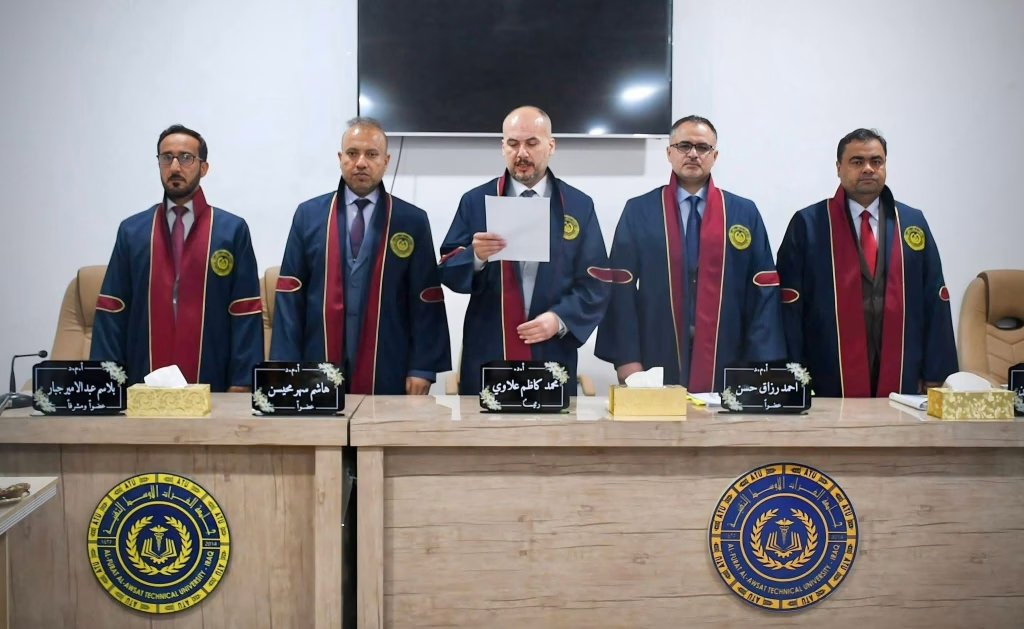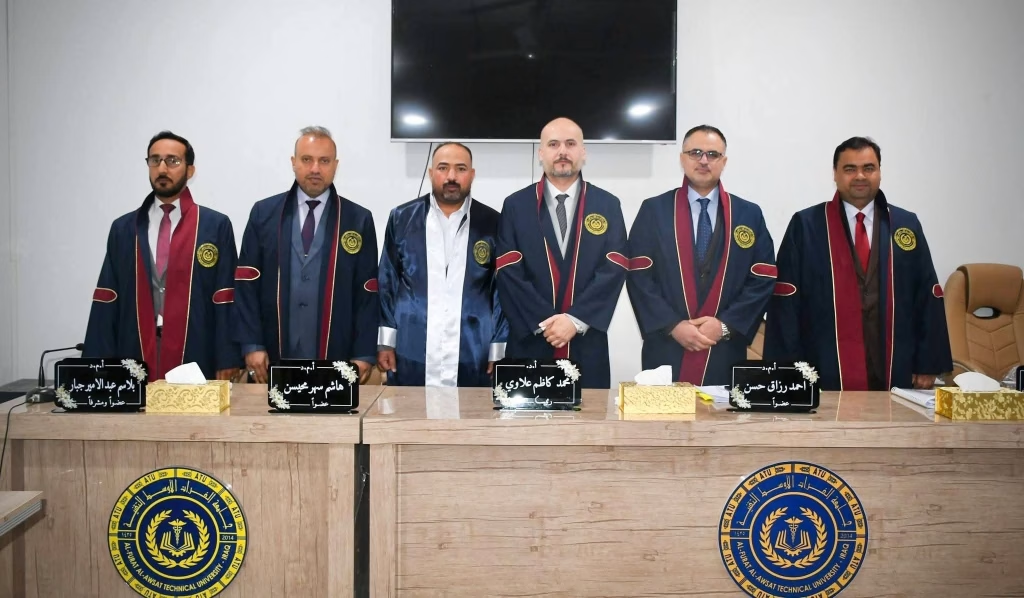
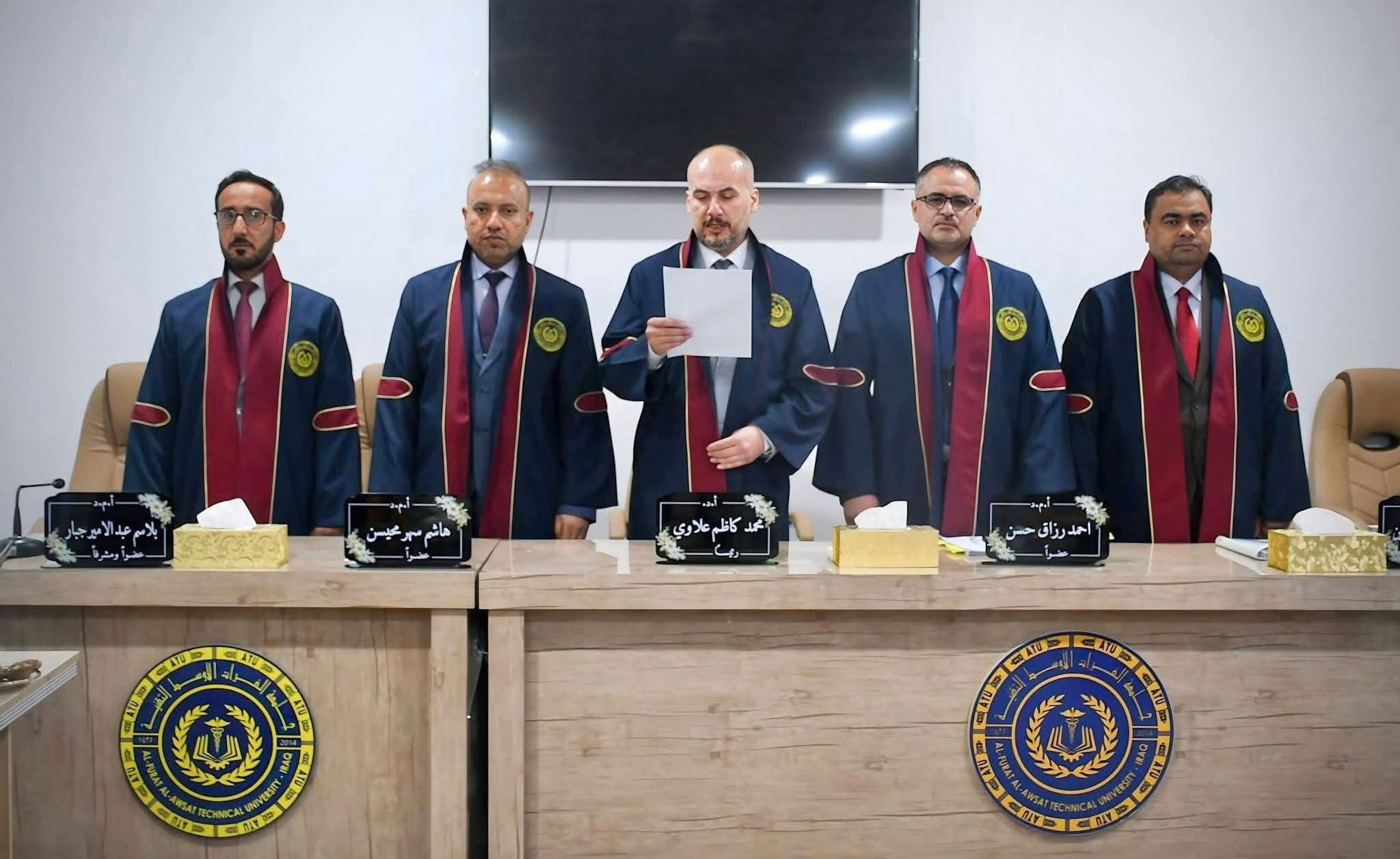
A master’s thesis was discussed at the Engineering Technical College of Najaf, part of the Middle Technical University of Al-Furat Al-Awsat, titled:
“Experimental and Numerical Study of the Effect of Geometrical Parameters on the Performance of a Savonius-Type Vertical Axis Wind Turbine”
The thesis was submitted by the researcher Qusai Mohammed Jabbar from the Department of Power Mechanics Technologies Engineering. The study aimed to develop and optimize the geometric design of a Savonius wind turbine by investigating several design variables, including the upper tilt angle, blade orientation angle, and arc coefficient, and examining their effects on the power coefficient (Cp), torque coefficient (Ct), and tip speed ratio (TSR).
The research also included a three-dimensional unsteady numerical analysis using ANSYS CFX, employing the SST k-ω turbulence model to simulate airflow behavior and analyze velocity distribution, pressure fields, and vortex structures around the turbine.
In addition, the study involved the design and fabrication of a low-speed wind tunnel to conduct experimental testing, with the aim of validating flow uniformity, ensuring the accuracy of experimental results, and comparing them with numerical simulations. Furthermore, the optimal turbine model was manufactured using 3D printing technology based on SolidWorks (2025 version) and Hyper-PLA material to experimentally verify the performance of the improved design.
The researcher focused on enhancing the aerodynamic performance of the Savonius turbine and reducing the negative torque effect of the returning blade, in addition to improving airflow smoothness around the turbine. This was achieved by studying the impact of geometric modifications on flow behavior and operational stability under low and moderate wind speeds.
The numerical and experimental results showed a clear improvement in turbine performance, where the power coefficient (Cp) increased from 0.2503 in the baseline model to 0.2716 in the improved design, achieving an enhancement of approximately 8.5%, with good agreement between experimental and numerical results and an error margin of less than 5%.
Moreover, the results indicated significant improvements in velocity and pressure distribution, along with a reduction in vortex formation behind the returning blade, which contributed to higher energy extraction efficiency and improved turbine stability at wind speeds ranging from 5 to 7 m/s.
The thesis concluded that the integration of numerical simulation and experimental testing using a locally manufactured wind tunnel represents an effective methodology for developing Savonius wind turbines and enhancing their performance in renewable energy applications characterized by low and variable wind speeds.