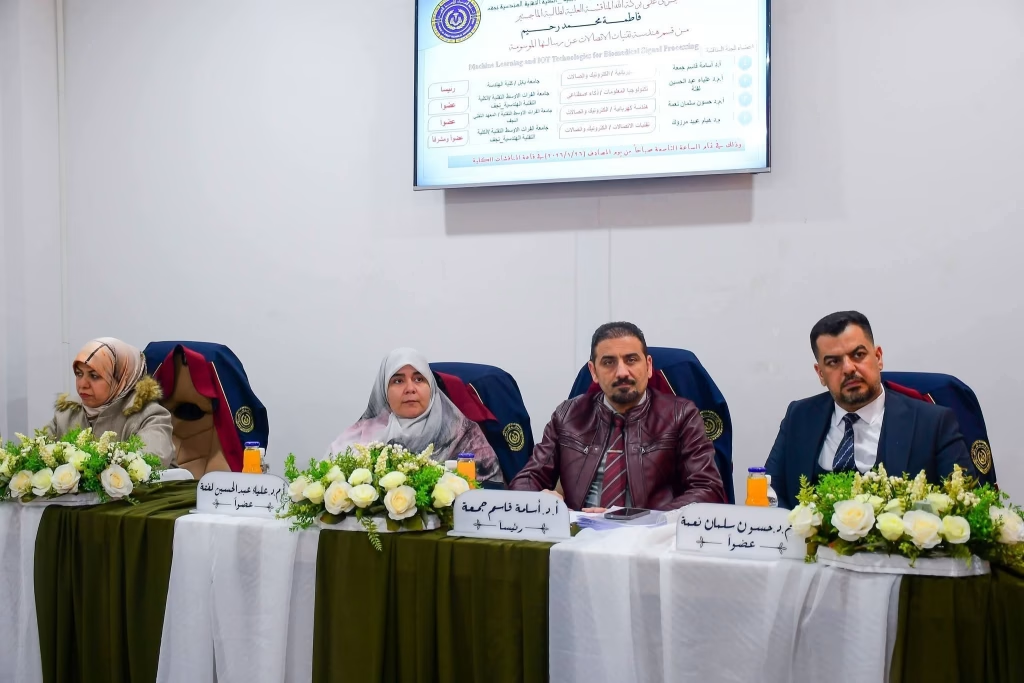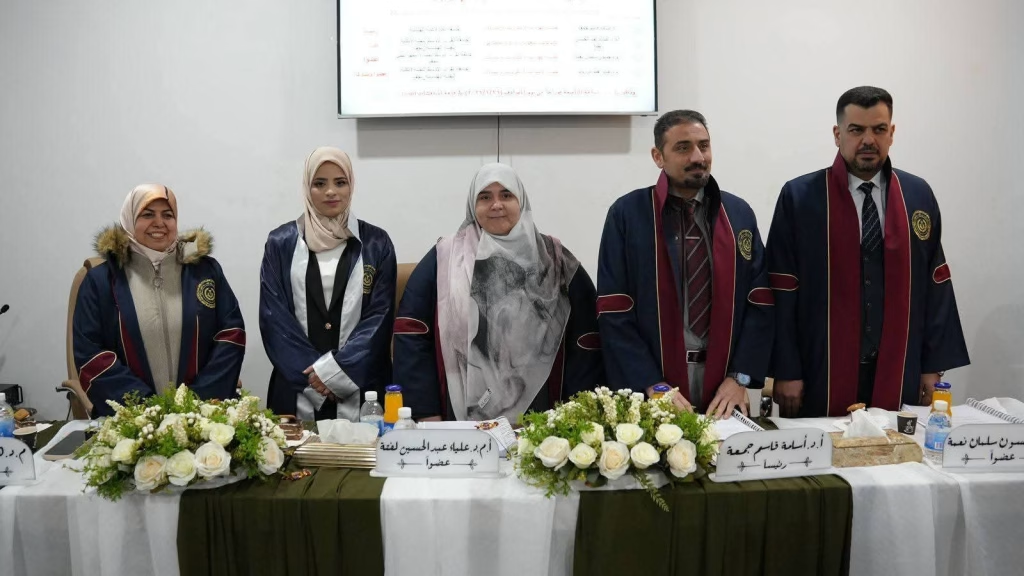

The Technical Engineering College of Najaf at Al-Furat Al-Awsat Technical University witnessed the defense of a Master’s thesis by the researcher Fatima Mohammed Raheem from the Department of Communication Engineering Technologies. The thesis was entitled:
“Machine Learning and Internet of Things Techniques for Biomedical Signal Processing.”
The study aimed to design an intelligent system for classifying cardiac arrhythmias based on single-lead electrocardiogram (ECG) signals by integrating machine learning techniques with Internet of Things (IoT) technologies. The proposed model was implemented on a low-power edge device, such as a Raspberry Pi, in order to achieve high classification accuracy while maintaining low energy and resource consumption.
The results confirmed that the proposed system achieved high classification accuracy for various cardiac rhythm conditions. The study also demonstrated successful noise removal from ECG signals while preserving signal morphology, in addition to reducing the model size while maintaining performance through the use of knowledge distillation techniques. Furthermore, the system proved its capability for real-time operation on low-resource edge devices.
The researcher recommended expanding the analysis of the system’s energy and memory consumption, improving the accuracy of detecting rare cardiac conditions, testing the system on real-world data and in non-clinical environments, and enhancing the interpretability of the model’s outputs for medical applications. Additional recommendations included further development of the hardware platform to support future medical applications.