A Qualitative Transformation in Technical Education… University Council Holds Its First Meeting and Sets a Roadmap for a Year of Excellence and Partnership with the Labor Market
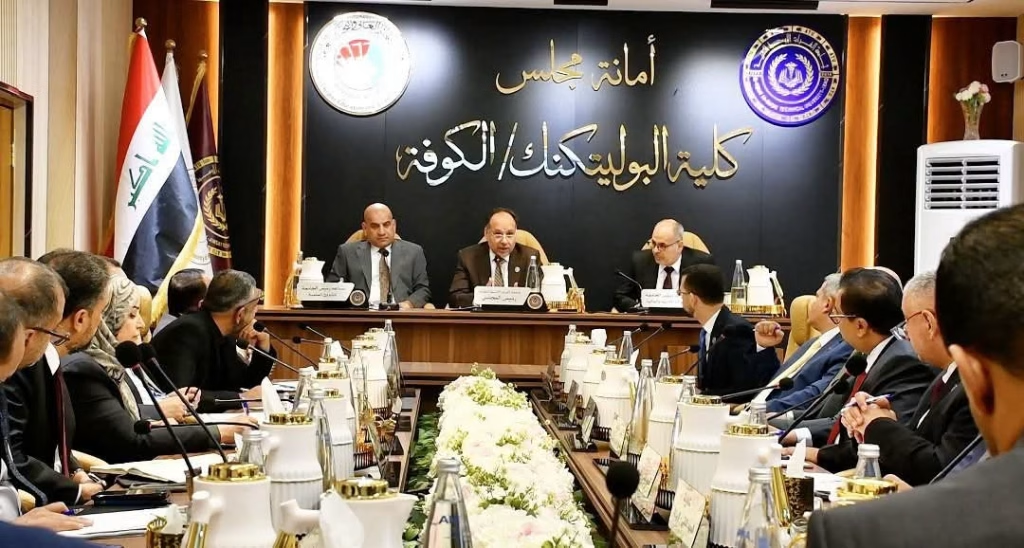
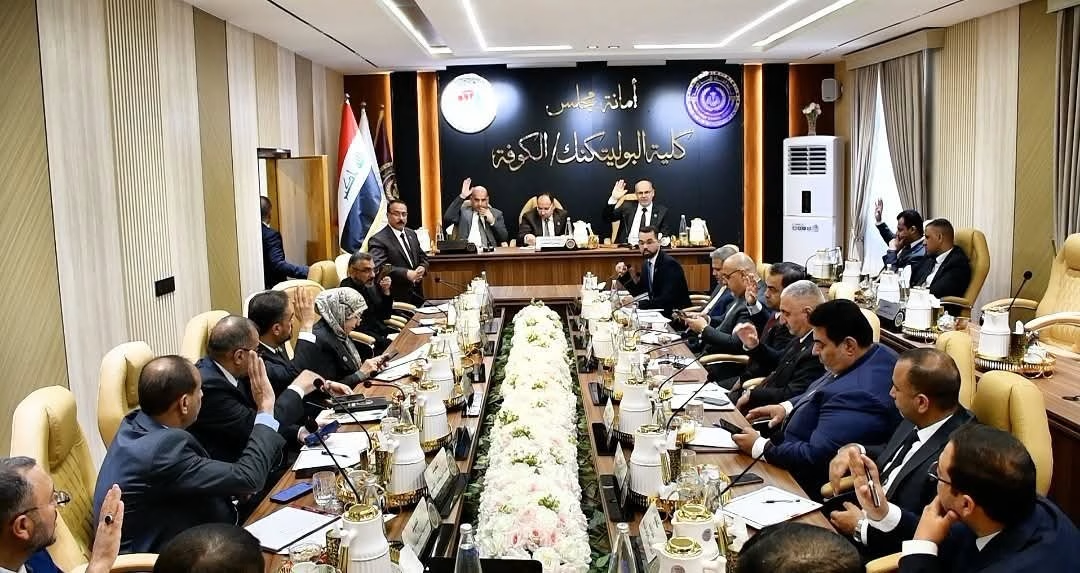
Reflecting a spirit of transformation and ambition, and coinciding with the historic institutional achievement of converting all technical institutes at Al-Furat Al-Awsat Technical University into Polytechnic Colleges, along with the establishment of promising new specialized departments that meet future needs, Al-Kufa Polytechnic College hosted the first meeting of the University Council for the 2026–2027 academic year.
The meeting was chaired by the University President, Prof. Dr. Hassan Latif Al-Zubaidi, in the presence of all Council members and the directors of the relevant departments at the University Presidency.
Al-Zubaidi opened the meeting with a welcoming speech filled with optimism, extending his highest congratulations and best wishes to the Council members and, through them, to all university staff and students on the occasion of the beginning of the new academic year. He expressed his hope that it would be a year filled with success, academic excellence, and continued advancement of the educational process.
He also congratulated his colleagues, the Council members who had recently received their appointment orders for their new positions, wishing them a successful career in serving the university.
Decisive Ministerial Directives… No Admission Without Integrated Digital Systems
The University President carefully reviewed the directives issued by the Minister of Higher Education and Scientific Research during the most recent meeting of the Opinion Committee, stressing the importance of strict compliance with them. The key directives included:
- Completing all student records in the Student Information System (SIS).
- A decisive requirement: No student may be admitted to any public or private institution for the 2026–2027 academic year through any admission channel unless the institution has completed data entry in all three systems—the Student Information System (SIS), the Smart Education System (Learn-IQ), and the Examination Committee System (GB)—for the 2024–2025 and 2025–2026 academic years and transferred the data to the new academic year.
- Unifying the efforts of educational institutions with other government institutions to exchange expertise, improve government performance, and implement strategic programs that contribute to sustainable development.
Al-Zubaidi’s Roadmap for a Year of Excellence
Al-Zubaidi also directed the deans of the university’s colleges and institutions to implement a set of key directives as part of the launch of the Roadmap for a Year of Excellence, outlining the features of an exceptional academic year:
- Maximum readiness: Ensuring that all educational and service facilities—including classrooms, workshops, laboratories, and training equipment—are fully prepared to provide high-quality education, with particular emphasis on the practical and applied component that represents the core identity of technical universities.
- Creating an attractive model university environment: Maintaining green spaces on an ongoing basis and carrying out comprehensive periodic maintenance of student housing facilities and college buildings in preparation for welcoming students.
- Keeping the university active throughout the day: Distributing activities and events across the day, including morning and evening lectures, student activities, capacity-building courses, consultations, and workshops.
- Education that keeps pace with the world: Directing professors and trainers to adopt modern teaching methods comparable to those used at leading universities, while encouraging students’ creative and ethical thinking.
- Updating curricula to meet changing labor-market requirements: Developing genuine partnerships with various state sectors by ensuring their representation on department and college councils.
- Revitalizing scientific research: Establishing research groups in partnership with reputable universities, focusing on publication in Scopus- and Clarivate-indexed databases and participation in conferences, while emphasizing applied technical research that provides solutions to real-world problems.
The Council concluded its meeting by reviewing the agenda and conducting an extensive discussion of academic, administrative, financial, and student-related matters, reaching the necessary recommendations and decisions aimed at advancing the university toward leadership and excellence.