Launch of the 119th Training Course on Teaching Methods in Accordance with the Updated Ministerial Curriculum
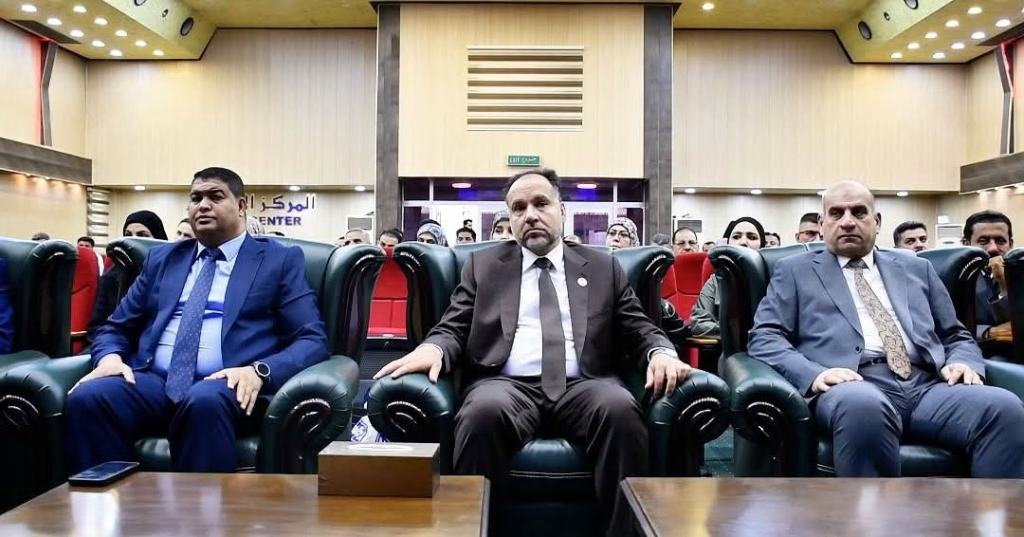
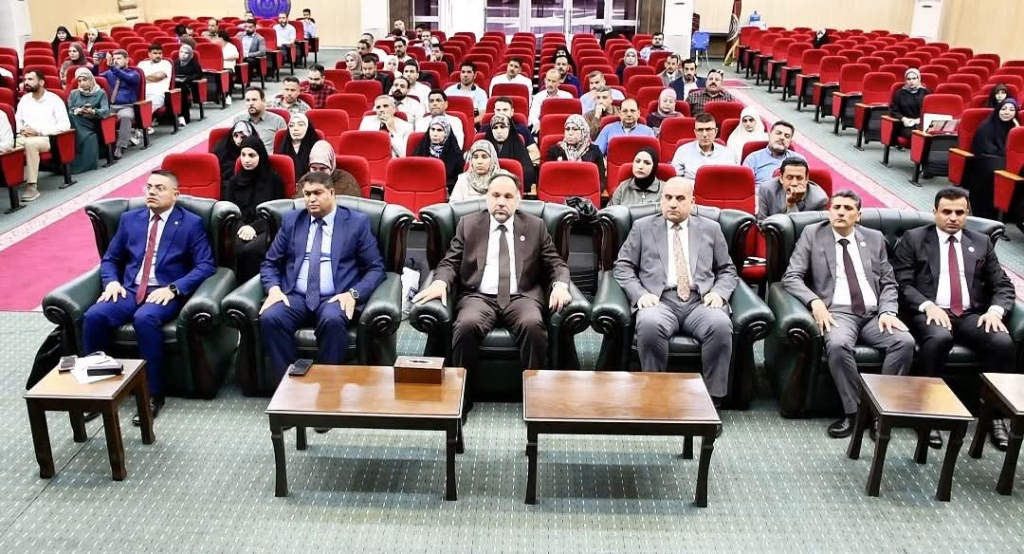
As part of Al-Furat Al-Awsat Technical University’s efforts and strategic direction toward digital transformation, Professor Dr. Hassan Latif Al-Zubaidi, President of Al-Furat Al-Awsat Technical University, inaugurated the 119th Training Course on Teaching Methods for the educational, applied, humanities, agricultural, medical, engineering, and administrative specializations. The course was organized by the Continuing Education Center at the University Presidency under the updated system for managing the University’s professional development training programs for the academic year 2023–2024, in accordance with the updated curriculum within the Ministerial Program.
During the inauguration, the University President welcomed the participating faculty members and emphasized the importance of such training courses in equipping participants with the necessary skills to prepare and deliver lectures using modern technologies that keep pace with global technological developments. He noted that the launch of specialized training programs of this kind represents a promising qualitative step toward developing the work of the Continuing Education Department. Such initiatives are aligned with the University’s objectives and mission to serve various segments of society.
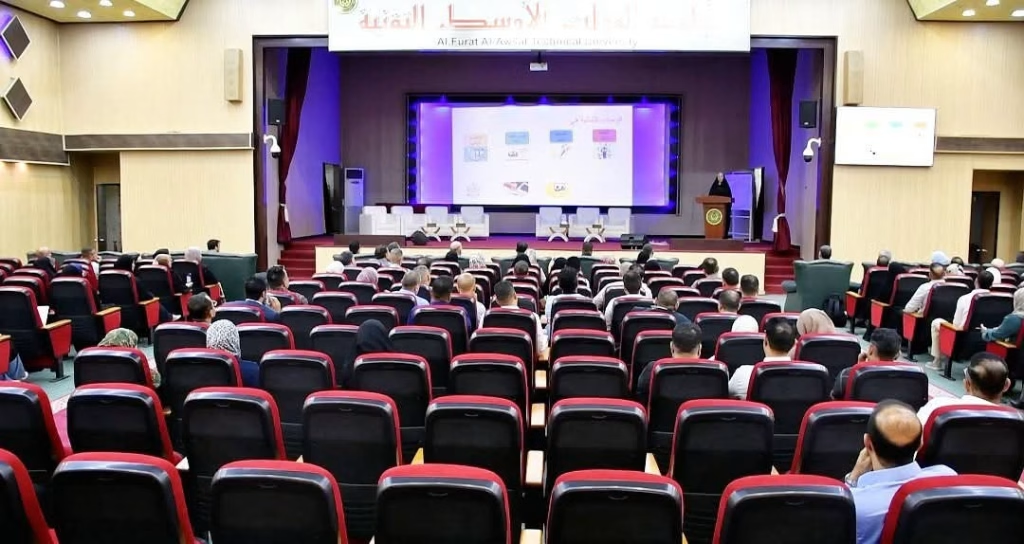
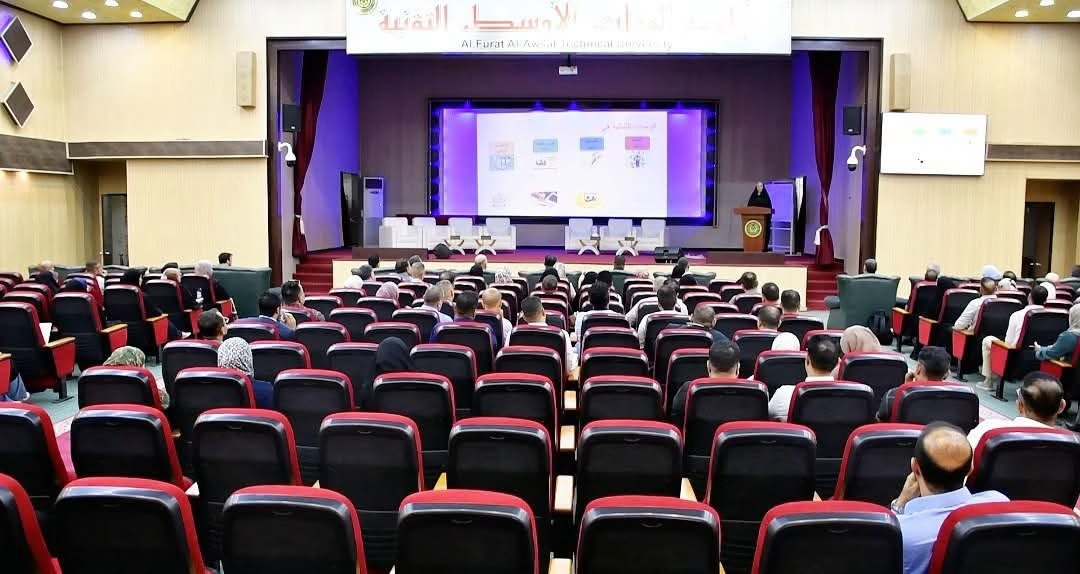
The course was attended by 120 trainees representing the four designated specialization groups, with participants coming from various public and private universities as well as the Directorates of Education in the governorates of Babylon, Al-Qadisiyah, and Najaf Al-Ashraf.
The first introductory lecture was entitled “Teaching Methods toward Blended Learning in Accordance with the Updated Curriculum at Continuing Education Centers.” It was delivered by Ministerial Trainer Professor Dr. Khitam Abdul-Hassan Shannan.
The course on modern teaching methods is considered one of the requirements for academic teaching in both public and private universities. The course will continue for one and a half months, during which trainees will complete eight training units.
The first four units will cover lectures on blended learning, instructional design, assessment and feedback, and digital content development. Trainees will then be required to deliver a ten-minute lecture prepared by each participant, which will be evaluated by a committee of trainers.
Units Five through Eight will cover facilitation strategies, professional ethics, quality of education, and research methodology.
Professor Dr. Mahdi Hatif Kadhim, Director of the Continuing Education Center, stated that the course lectures will be delivered by qualified trainers from the University and its various formations, in addition to trainers from a number of public and private universities. The course will employ a combination of face-to-face, online, and self-directed learning modalities.
He further explained that the final week of the course will address the second assessment component, which requires each trainee to prepare a 60-minute recorded lecture, in addition to the third assessment component, which involves preparing an educational portfolio in the trainee’s area of specialization. Both components will be evaluated by the training committee.
Registration for the course was conducted through the University’s dedicated training-program management system, where participants entered their personal and professional information and selected their preferred method of fee payment. Examinations will also be conducted through the same system, culminating in the issuance of the final results and the corresponding certificate of authenticity.
Registration for future Teaching Methods courses covering all specializations will be opened following approval from the Ministry of Higher Education and Scientific Research. Further details regarding registration will be announced at a later date.
The inauguration was attended by Professor Dr. Ahmed Ghanim Wadi, Assistant President of the University for Scientific Affairs, along with a number of department directors and staff members of the Continuing Education Center.