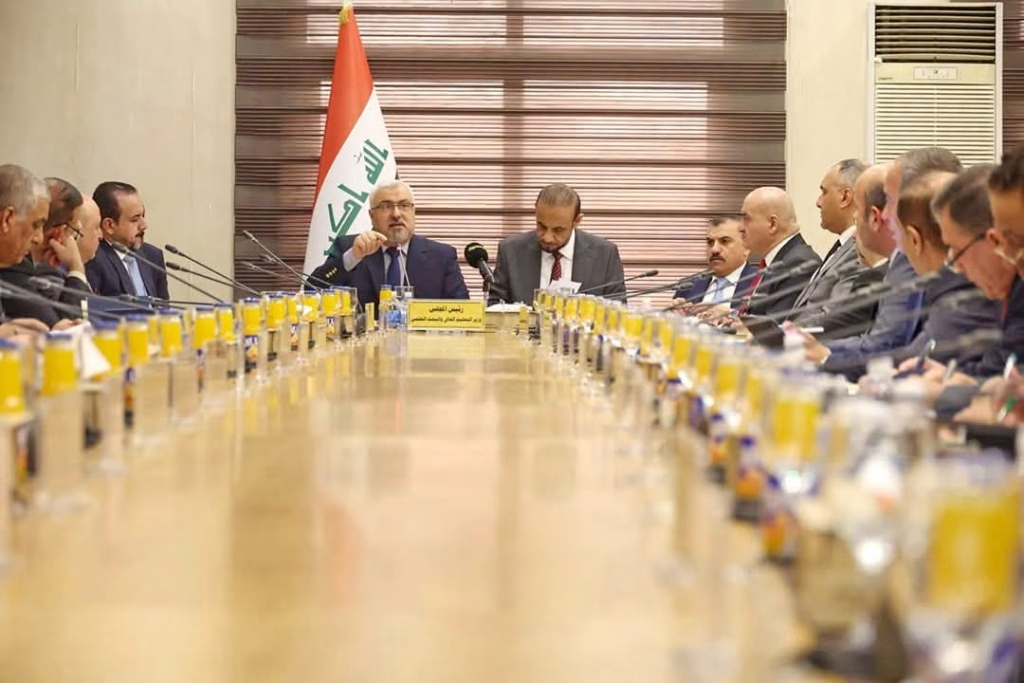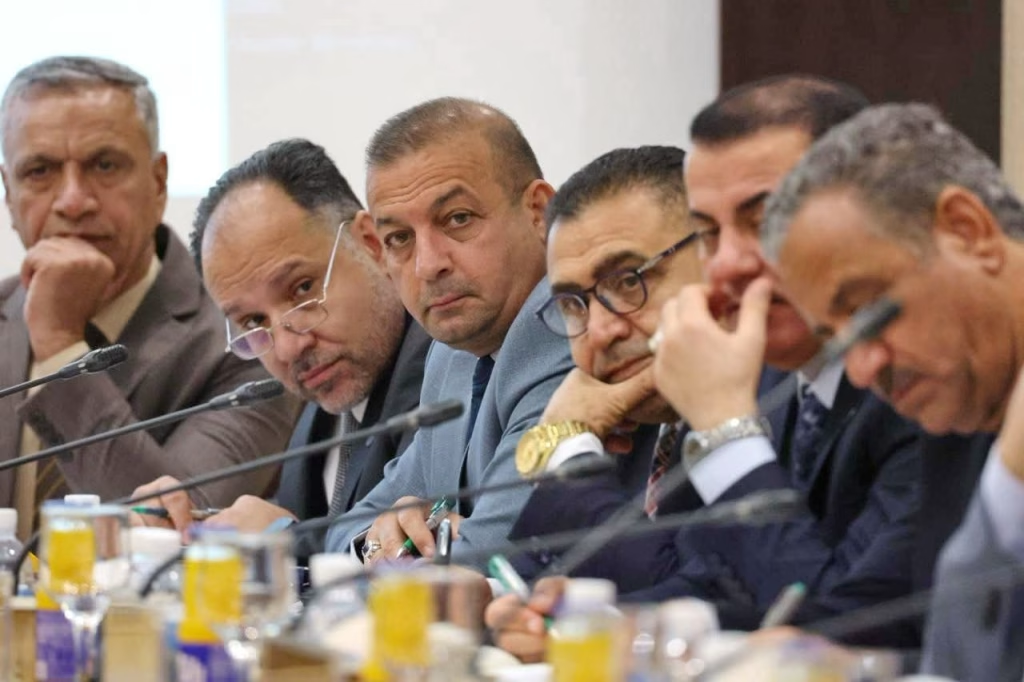
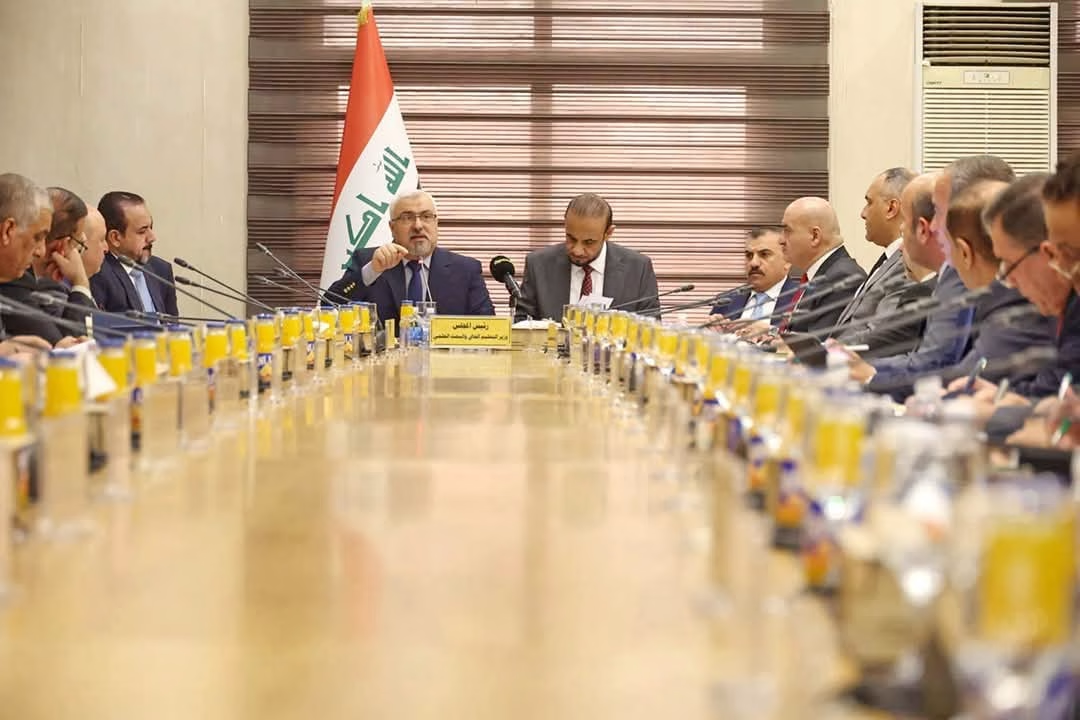
Professor Dr. Hassan Latif Al-Zubaidi, President of the Middle Euphrates Technical University, attended the Advisory Board meeting chaired by His Excellency Professor Dr. Haider Baha Al-Hassani, Minister of Higher Education and Scientific Research. The meeting was attended by Dr. Adel Al-Rikabi, Chair of the Parliamentary Committee on Education; MP Qutaiba Al-Bayati, a member of the committee; senior officials of the Ministry; and presidents of public universities.
The Minister affirmed that the Ministry would continue to fulfil its scientific and service-related responsibilities, support students, provide the conditions necessary for their academic success, and develop the higher education system in line with the requirements of the current stage. He also highlighted the importance of transitioning towards the productive university model and expanding opportunities for leadership, innovation, and partnerships with various sectors.
He further emphasized the need to strengthen the procedures governing standardized assessment examinations to ensure accurate evaluation of students’ academic performance, exercise the powers granted within the applicable legal and administrative frameworks, and fulfil the requirements of educational quality in accordance with approved standards.
The Advisory Board members discussed the items on the meeting’s agenda and proposals aimed at improving university performance. The Board voted to organize a peaceful protest on Thursday at universities in response to a call by Sayyid Muqtada al-Sadr, in rejection of the decision to ban the hijab in educational institutions in Azerbaijan. The protest was to last only a few minutes and was not to interfere with scheduled classes. It was also stipulated that no photographs or flags would be raised, except for the Iraqi national flag.
The Advisory Board also approved inviting Azerbaijani female students who wear the hijab to pursue their studies at Iraqi universities through approved admission channels and the Study in Iraq initiative, including the full-scholarship admission channel.
As part of efforts to regulate university admissions, the Board approved reducing admission thresholds for certain specializations in evening-study programmes at public and private universities. The Department of Studies, Planning, and Follow-up was tasked with implementing the necessary procedures.
The Board also decided to amend University Examination Instructions No. 11 of 2026 to strengthen the integrity and effectiveness of the examination process.
Furthermore, the Advisory Board approved granting university councils the authority to decide on transfer and visiting-student requests in accordance with approved regulations and in coordination with the relevant college deanships, within the narrowest limits warranted by educational needs.
The Board also discussed the transition towards the productive university model and the development of mechanisms for investing in university resources and capabilities to strengthen the role of educational institutions in serving society and promoting development.
In addition, the Advisory Board considered granting university councils the authority to address exceptional cases during the 2026–2027 academic year, with any adjustment limited to a maximum of one mark and subject to the applicable regulations and instructions.
The Board also reaffirmed its commitment to strengthening university autonomy and taking the necessary measures in accordance with the applicable legal and administrative frameworks. It further emphasized that extensions of service should be granted exclusively for teaching purposes and that such extensions should not be used as a basis for occupying administrative positions.
The meeting concluded with the adoption of additional decisions concerning institutional performance, university administration, and the further development of higher education institutions.