Distinguished Ministerial Trainers,
Esteemed Colleagues and Participants,
Peace, mercy, and blessings of Allah be upon you.
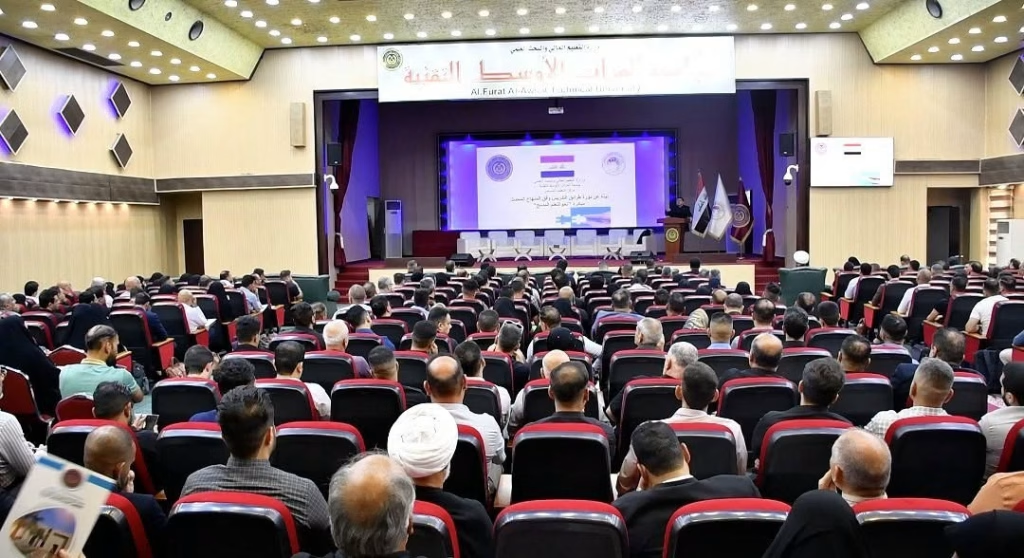
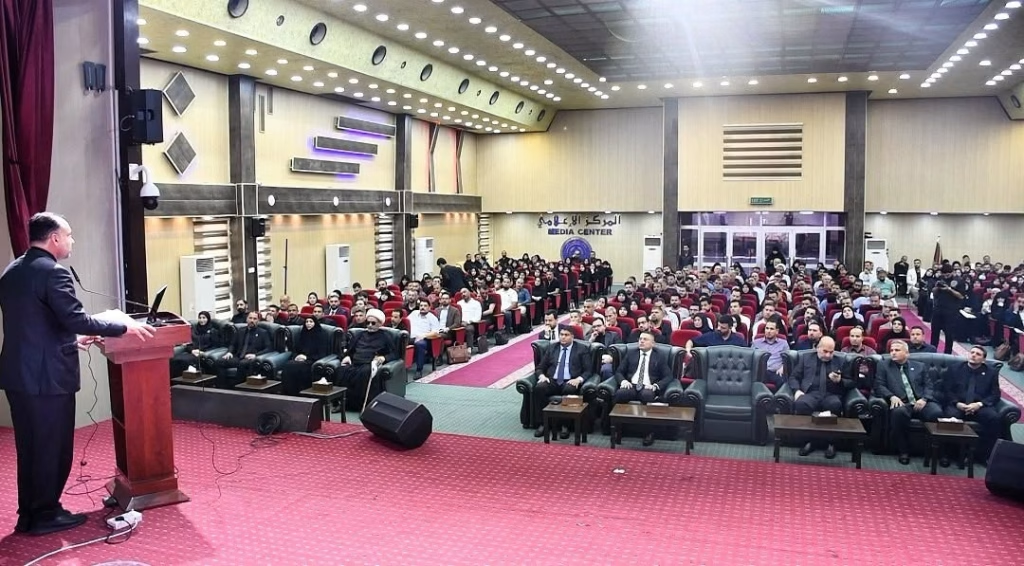
It is my great pleasure to welcome you all to Al-Furat Al-Awsat Technical University on the occasion of the opening of the Teaching Methods Training Course, conducted in accordance with the updated ministerial curriculum. I wish you a productive and rewarding training experience that will contribute to the enhancement of your professional competencies and strengthen your role in preparing generations equipped with knowledge, skills, creativity, and innovation.
This course represents an integral part of a national initiative adopted by the Ministry of Higher Education and Scientific Research to redefine the philosophy of university education. It seeks to facilitate the transition from traditional teaching approaches to contemporary learner-centered education based on active learning, learning outcomes assessment, and alignment with the needs of society and the labor market.
Al-Furat Al-Awsat Technical University recognized at an early stage that the quality of education cannot be achieved solely through curriculum development; rather, it begins with the continuous professional development of university faculty, who constitute the primary driving force behind educational transformation. Accordingly, the University has made faculty capacity building a central pillar of its strategic plan, linking its professional development programs to digital transformation, programmatic and institutional accreditation, and competency-based education, in line with international best practices in technical and vocational education.
Digital transformation is no longer an option but a necessity for creating smart and interactive learning environments that utilize modern technologies, artificial intelligence, and digital platforms to enhance educational quality. Likewise, program accreditation requires clear evidence that faculty members possess contemporary pedagogical competencies, are capable of designing curricula based on learning outcomes, and apply assessment methods that effectively measure knowledge, skills, and values in a balanced manner. This is precisely why these training courses represent one of the University’s key strategic instruments for achieving these objectives.
Ladies and Gentlemen,
The efforts of the University and the Continuing Education Center have produced remarkable achievements over the past two years since the adoption of the updated ministerial curriculum. During this period, the University organized 119 training courses across seven academic disciplines, with 17 courses in each discipline, benefiting more than 2,328 trainees. This achievement reflects the confidence placed in the Continuing Education Center and demonstrates the University’s commitment to fostering a culture of continuous professional development.
This success has been made possible through the dedication of an outstanding team of national experts. The University currently has 28 certified ministerial trainers possessing extensive academic and professional expertise. Furthermore, the Continuing Education Center is equipped with 13 modern training halls, each capable of accommodating more than 45 trainees, thereby providing an integrated educational and training environment that meets contemporary standards in university training.
We are also proud that the University has expanded its international outreach through academic partnerships with leading Arab and international universities and educational institutions. These collaborations have facilitated joint training programs and the exchange of expertise with Istanbul Aydın University (Türkiye), Universiti Sains Malaysia (USM), Farhangian University (Iran), and Gulf College (Oman), in addition to several other universities and academic institutions. These partnerships reflect the University’s openness to international best practices and reinforce its growing reputation at both the regional and international levels.
Distinguished Guests,
Our responsibility today extends far beyond the transfer of knowledge. It lies in preparing graduates who possess the competencies necessary to succeed in a rapidly changing world. This requires faculty members to serve as leaders of learning, facilitators of knowledge, innovators in teaching methodologies, and effective users of modern educational technologies, while fostering learning environments that encourage critical thinking, teamwork, creativity, and lifelong learning.
I encourage all participants to take full advantage of this course as an opportunity for genuine professional growth, meaningful exchange of experiences, and engagement with modern educational practices. Such efforts will undoubtedly contribute to enhancing academic performance and advancing the University’s vision of establishing a leading technical education system capable of competing at the national, regional, and international levels.
In conclusion, I extend my sincere appreciation to the Ministry of Higher Education and Scientific Research for its continuous support of academic development initiatives. I also express my gratitude to the administration of the Continuing Education Center, the distinguished ministerial trainers, and all organizing committees whose dedicated efforts have ensured the success of these training programs.
Finally, I once again welcome all participants and wish them every success. May this course represent another important milestone in your professional journey and a valuable contribution to Al-Furat Al-Awsat Technical University’s continued pursuit of excellence, innovation, and leadership.
Thank you.
Peace, mercy, and blessings of Allah be upon you.
Department of Media and Government Communication
Al-Furat Al-Awsat Technical University