Within the framework of adopting the participatory approach and national consultations to monitor progress towards the sustainable development goals adopted in the 2030 Agenda …
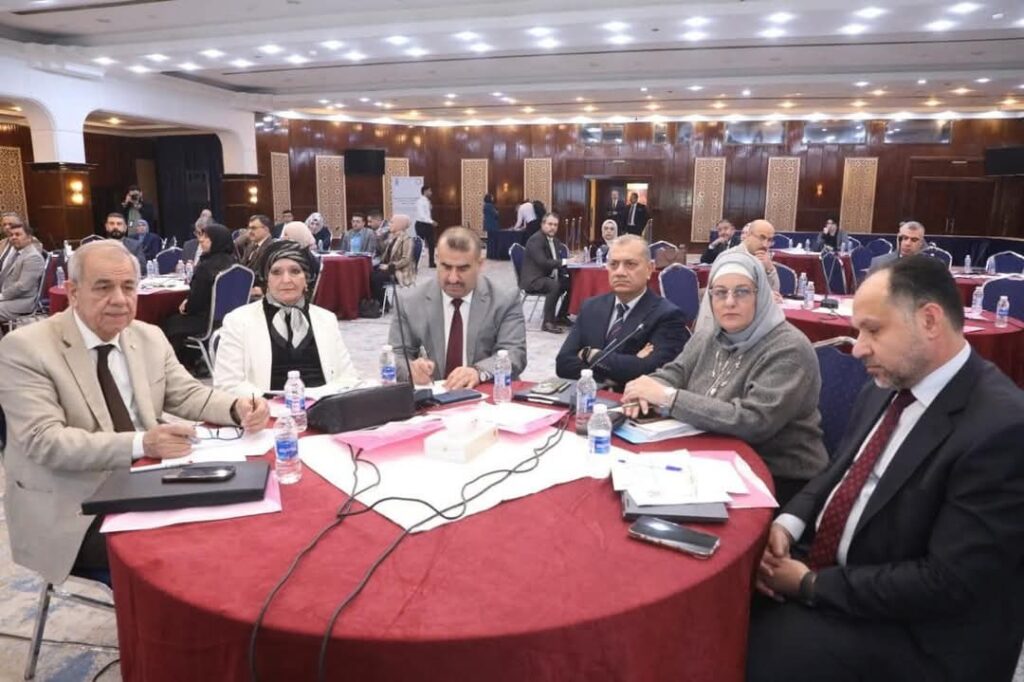
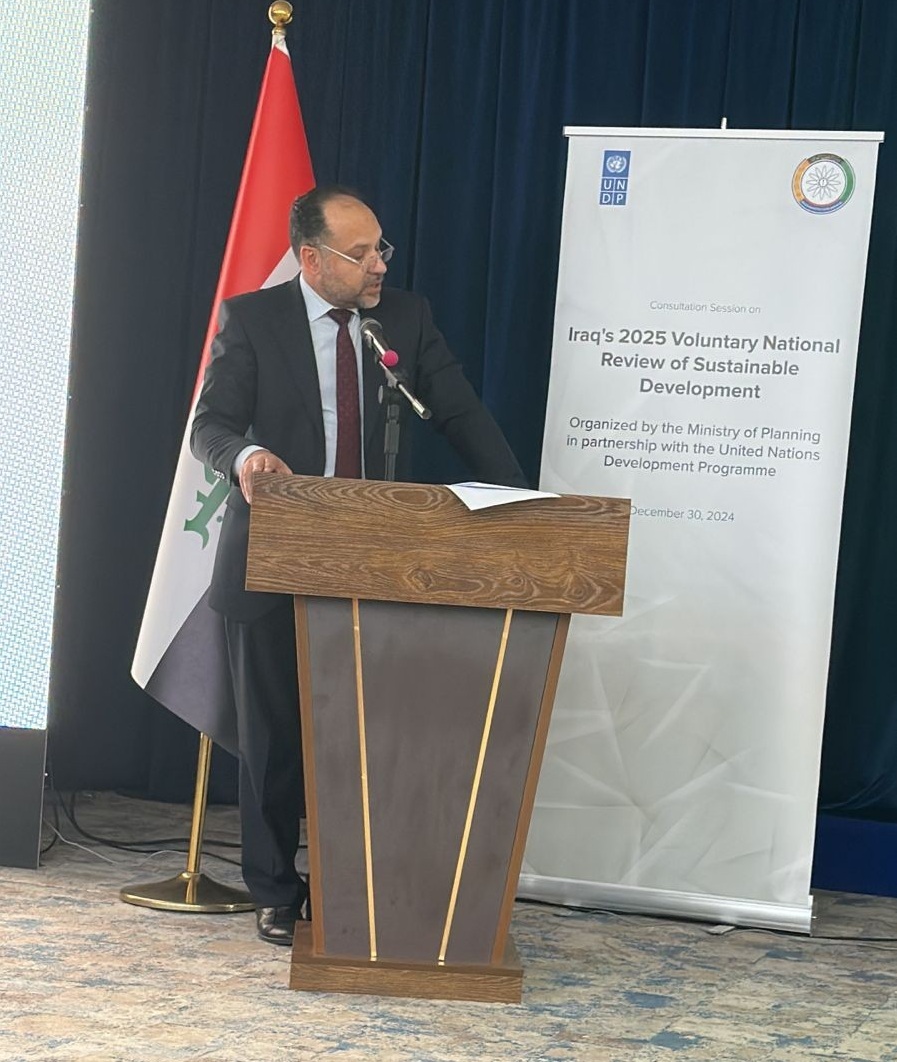
The President of Al-Furat Al-Awsat Technical University, Professor Dr. Hassan Latif Al-Zubaidi, participated as a team leader representing the Ministry of Higher Education and Scientific Research, in the consultative session organized by the Ministry of Planning, to discuss the preparation of the third voluntary report on sustainable development in Iraq, in cooperation with the United Nations Development Program, and the adoption of the participatory approach and national consultations, to monitor progress towards the sustainable development goals.
Al-Zubaidi gave a presentation on the third voluntary report, which included (the roadmap for completing the report, areas, time frame, roles of partners and coordination mechanisms).
It is worth noting that the session was opened by the Deputy of the Ministry for Technical Affairs, Dr. Maher Hammad Johan, who stated in the opening speech: The meeting came to take our first steps towards preparing the third voluntary report on sustainable development, which Iraq will present during the activities of the United Nations High-Level Political Forum in New York during September of next year. Emphasizing the importance of voluntary reports in general and the third report in particular, as it is a broad illumination of the important steps achieved in Iraq, in an effort to achieve the goals of sustainable development, the investment file in achieving reconstruction, and ensuring justice in the country, Johan continued that Iraq’s success in achieving three important and fundamental goals in the development path, the first is preparing and launching the five-year national development plan 2024-2028, and what it included of strategic goals based on innovative solutions, the second is forming the permanent council for developing the sector, and the third is Iraq’s success in conducting the general population census, the results of which will be of great importance in drawing a new map of the demographic reality, and thus redirecting development paths, in a way that contributes to achieving its sustainable goals. He called for making more efforts to prepare this report, which paints a true picture of the development scene in Iraq.
For her part, the Director of the Iraq Support Program for Sustainable Development at the United Nations Development Program, Dr. Sundus Abbas, explained: Today’s consultative session is a pivotal step in the framework of preparing the voluntary national report for the year 2025, which will be presented at the High-Level Political Forum. It is no longer just a document presented at the international level, but rather a mirror of collective efforts towards achieving sustainable development and the 2030 Agenda, indicating that Iraq has made tangible progress in several areas related to sustainable development, from strengthening infrastructure to improving basic services, through empowering women and youth, and supporting the private sector. In addition to the great efforts in the field of providing updated and classified data during this year, she pointed out that preparing the voluntary national report represents an opportunity to evaluate achievements, highlight the successes achieved, and face challenges with transparency, explaining that it reflects the high commitment to partnership and teamwork between governmental and non-governmental sectors, and the private sector, and stressed by saying: Without this cooperation and partnership, sustainable development cannot be achieved, stressing the continued support of the United Nations Development Program for the Iraqi government in achieving the goals of sustainable development by providing technical support, strengthening companies and presenting a unified and comprehensive vision. The session also included another presentation: Dr. Wafaa Jaafar Al-Mahdawi presented voluntary reports (importance and dimensions). The meeting was attended by several deputies of ministries, general managers, and representatives of the relevant ministries and entities not affiliated with the ministry.